[ Reference ]
NACH Return Reason Codes: The Complete List, and What Each One Means for Credit
Every NACH presentation return and reject code, grouped by what it tells you about the borrower. Which codes are credit events, which are your own operational failures, and how to compute a bounce rate that means something.
9 min read · 31 August 2026
Contents
A bounce count is nearly useless on its own. Three failed presentations in a quarter could mean a borrower who has run out of money, or it could mean your operations team presented against an expired mandate three times.
The reason code distinguishes them, and most credit systems throw it away — recording that a debit failed without recording why. This page lists every NACH presentation code and groups them by what they actually tell you about the borrower.
Return versus reject: the distinction that comes first
NPCI classifies these codes into two types, and the difference is more important than any individual code.
A return means the debit reached the borrower's bank and the bank declined it. Something about the account or the borrower caused the failure.
A reject means the transaction never got that far. It failed validation before any account was tested — wrong amount against the mandate, presented outside the mandate's date range, invalid file format, duplicate reference number. The borrower's account was never touched.
Rejects belong in an operations report, not a credit file. If your bounce rate includes them, it is partly measuring your own collections stack. Codes 21 through 34 and 72 through 99 are rejects, which is a substantial portion of the total code set.
Codes grouped by credit meaning
Capacity failures — the borrower did not have the money
| Code | Description |
|---|---|
| 04 | Balance Insufficient |
| 05 | Not Arranged For |
| 55 | A/c in Zero Balance / No Transactions have Happened |
| 57 | Amount Exceeds limit set on Account by Bank for Debit per Transaction |
| 58 | Account reached maximum Debit limit set on account by Bank |
These are the genuine credit events. Code 04 is the one that dominates volume, and it needs context to interpret — more on that below. Code 55 is materially worse than 04: it describes an account with no balance and no activity, which is a dead account rather than a stretched one.
Codes 57 and 58 sit slightly apart. They are bank-imposed transaction limits rather than an absence of funds, and they often indicate an account whose limits were never configured for the EMI size — worth checking before treating as capacity failure.
Intent failures — the borrower chose not to pay
| Code | Description |
|---|---|
| 06 | Payment Stopped by Drawer |
| 17 | Returned as per customer request |
| 61 | Mandate Cancelled |
| 75 | Transaction has been cancelled by user |
This is the group most often misfiled, and it is arguably the most serious in the entire list.
A borrower with insufficient funds may simply have a salary date that falls after the presentation date. A borrower who stops the payment, requests a return, or cancels the mandate has made a decision. Money may well have been available. They withheld it.
Because no funds shortfall occurred, these codes are frequently classified as administrative and excluded from conduct scoring. That is backwards. Intent failures deserve more weight than capacity failures, not less, and a mandate cancellation on a live loan should trigger contact the same day.
Account status failures — the account is not usable
| Code | Description |
|---|---|
| 01 | Account Closed |
| 02 | No Such Account |
| 53 | Account Inoperative |
| 54 | Dormant Account |
| 68 | A/c Blocked or Frozen |
| 51 | KYC Documents Pending |
| 52 | Documents Pending for Account Holder turning Major |
| 56 | Small account, First Transaction to be from Base Branch |
| 70 | Customer to refer to the branch |
Codes 53 and 54 deserve particular attention in monitoring. An operating business whose collection account has gone dormant has not stopped trading — it has moved its banking somewhere you cannot see. That is an early warning signal about visibility, not a payment problem, and it will not appear in any bureau feed.
Code 68 is the one to escalate immediately. Accounts are blocked or frozen by court order, by regulatory action, or by the bank's own fraud controls, and every one of those causes matters to you.
Terminal events
| Code | Description |
|---|---|
| 07 | Payment Stopped under Court Order / Account Under Litigation |
| 60 | Account Holder Expired |
| 69 | Customer Insolvent / Insane |
Rare, unambiguous, and each requiring a specific process rather than a collections call.
Mandate administration — usually your failure, not theirs
| Code | Description |
|---|---|
| 08 | Mandate Not Received |
| 11 | Invalid IFSC / MICR Code |
| 12 | Mismatch in mandate frequency |
| 13 | Duplicate transaction — transaction already debited |
| 14 | Mandate expired |
| 15 | Incorrect amount — mismatch between mandate & transaction |
| 16 | Customer name mismatch |
| 21 | Invalid UMRN or inactive mandate |
| 22 | Mandate not valid for Debit transaction |
| 23 | Mismatch in mandate debtor account number |
| 24 | Mismatch in mandate debtor bank |
| 25 | Mismatch in mandate currency |
| 26 | Amount exceeds mandate max amount |
| 27 | Mandate amount mismatch |
| 28 | Date before mandate start date |
| 29 | Date after mandate end date |
| 30 | Mandate user number mismatch |
None of these says anything about the borrower's willingness or ability to pay. All of them will inflate a naive bounce rate.
Code 26 is worth singling out. It fires when a presentation exceeds the maximum amount registered on the mandate — common after a rate reset or a restructuring where the EMI was revised but the mandate was not. The borrower may have had the full amount sitting in the account.
Technical and file-level rejects
| Code | Description |
|---|---|
| 31 | Duplicate Reference Number |
| 32 | Invalid date |
| 33 | Item unwound |
| 34 | Invalid amount |
| 59 | Network Failure (CBS) |
| 72 | Item cancelled |
| 73 | Settlement failed |
| 74 | Invalid file format |
| 76 | Invalid Aadhaar Format |
| 77 | Invalid currency |
| 78 | Invalid Bank Identifier |
| 79 | Item sent before SOD or after FC |
| 80 | Wrong IIN |
| 81 | Product is missing |
| 82 | Item marked pending |
| 83 | Unsupported field |
| 84 | Invalid data format |
| 85 | Participant not mapped to the product |
| 86 | Invalid transaction code |
| 87 | Missing original transaction |
| 88 | Invalid original transaction |
| 89 | Original date Mismatch |
| 90 | Amount does not match with original |
| 91 | Information does not match with original |
| 92 | Core error |
| 93 | Wrong clearing house name in SFG |
| 94 | Amount is Zero |
| 95 | Inactive Aadhaar |
| 96 | Aadhaar mapping does not exist / Aadhaar number not mapped to IIN |
| 97 | Bad batch corporate user number / name |
| 98 | Bad item corporate user number / name |
| 99 | Too many mark pending returns |
Code 59 is the only one here that occasionally gets misread as borrower behaviour. It is a core banking system failure at the destination bank and should be re-presented, not recorded.
The four codes credit teams most often get wrong
04 is not one thing. Insufficient balance on the 3rd when salary arrives on the 7th is a presentation date problem. Insufficient balance on every attempt across the month is a capacity problem. The code is identical; the diagnosis is not. Resolving it requires end-of-day balance data around the presentation dates — specifically, whether the account held the amount at any point in the cycle. A borrower who consistently funds the account the day after a failed presentation is running tight but paying. One whose balance never approaches the EMI is not.
06 and 61 are being under-weighted almost everywhere. Stopping a payment or cancelling a mandate is a decision, not a shortfall. Treat them as more serious than 04, not less.
14 and 26 are being counted as borrower conduct. An expired mandate or an amount exceeding the registered ceiling is a failure in your own mandate lifecycle management.
53 and 54 are being ignored entirely. A dormant collection account on an active borrower means the banking relationship has moved. That belongs in monitoring, not in a bounce report.
Computing a bounce rate that means something
Four steps.
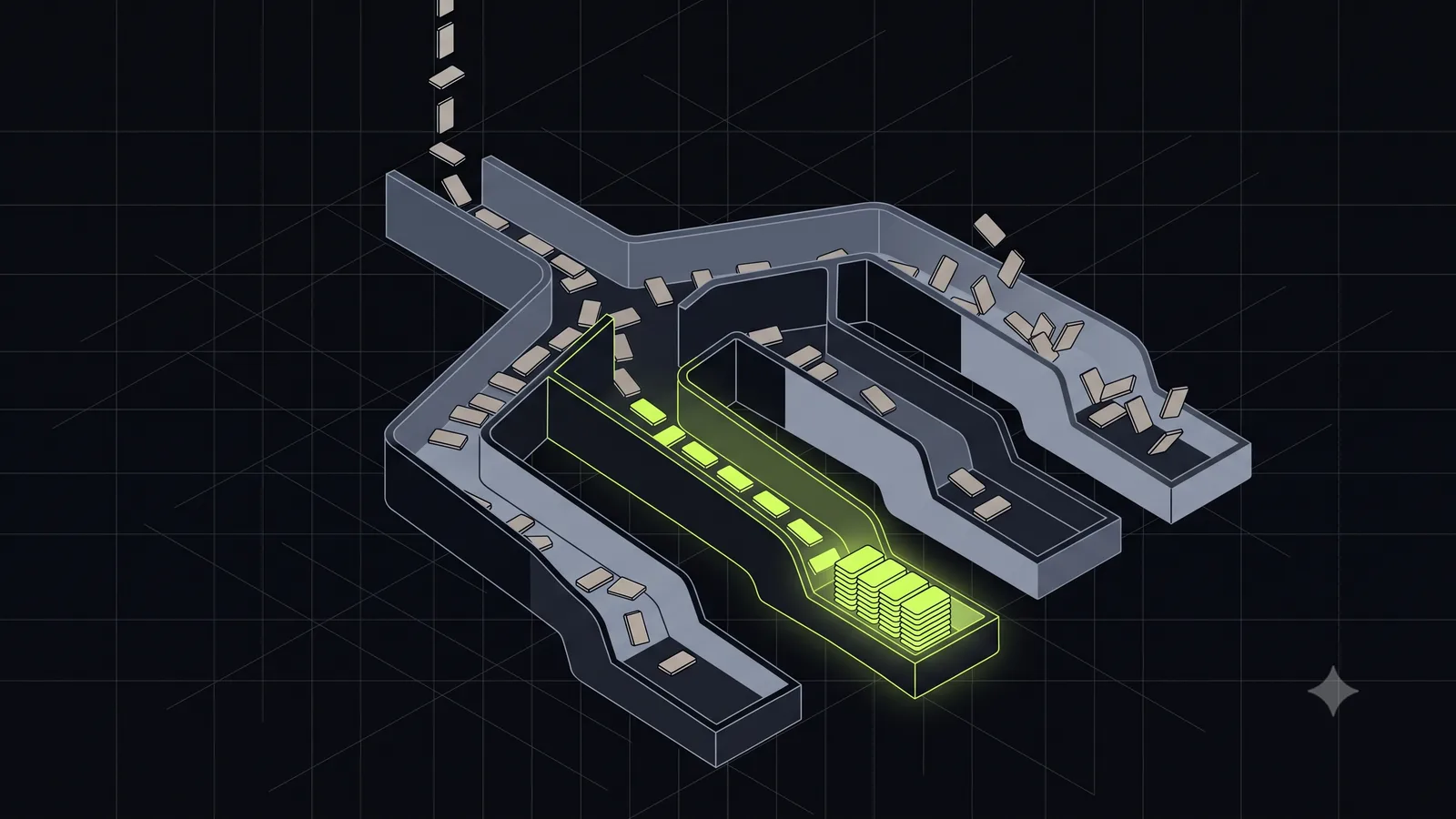
- Exclude every reject. They never reached the borrower's bank. If you cannot separate them, you do not have a bounce rate.
- Separate capacity from intent. Track them as two series. A borrower trending from capacity failures to intent failures is a different risk from one trending the other way.
- Read 04 against end-of-day balances. Without balance context the code is ambiguous by construction.
- Track month on month, not as a total. Four bounces spread evenly across a year is a borrower with a date-alignment problem. Four bounces in the last two months is a borrower in difficulty. A cumulative count cannot tell you which.
- For business borrowers, exclude returned deposits entirely. A cheque the borrower paid in that came back unpaid is their customer's failure, not theirs. Indian banks record that as an outward return, since the cheque went out for collection, while the borrower's own dishonour comes in through inward clearing. Counting the first as conduct penalises a borrower for their debtor's default, and the distinction is set out in one model, three borrowers.
Registration codes are a separate set
The codes above apply to presentation — the attempt to collect. Mandate registration failures use a different series, prefixed AP, covering conditions such as a blocked account, a closed account, a frozen account, an inoperative account, or no such account existing.
That set was revised recently. NPCI added 20 new codes, revised 33 descriptions and removed 22 codes, with member banks required to implement the changes by 1 January 2025, adding reasons such as an account number not linked to a debit card, a customer mobile number missing from CBS, and UIDAI OTP expiry. The same circular advised banks to analyse rejection patterns and hold transaction declines below 0.5%.
Registration failures tell you about onboarding friction. Presentation failures tell you about the borrower. Keep the two apart in reporting or the second gets swamped by the first.
Why this ends up mattering more than it should
Bounce data is the earliest reliable signal of borrower distress available to a lender. It precedes DPD by definition, it precedes bureau reporting by weeks, and unlike declared financials it cannot be dressed.
It is also routinely destroyed at the point of capture, either by discarding the reason code or by lumping every failure into a single count. A tool that surfaces bounces without classifying them has recorded the event and lost the information — which is why the distinction between technical and non-technical failures, and between capacity and intent, is worth building into the analysis rather than leaving to whoever reads the report.
Frequently asked questions
What does NACH return code 04 mean? Balance Insufficient — the account did not hold enough money at presentation. It does not distinguish between a borrower whose salary arrives after the presentation date and one with no capacity at all; end-of-day balance data across the cycle is needed to tell them apart.
What is the difference between a NACH return and a NACH reject? A return means the debit reached the borrower's bank and was declined there. A reject means the transaction failed validation before reaching the bank — wrong amount against the mandate, presented outside the mandate dates, invalid file format. Rejects say nothing about the borrower and should be excluded from bounce rates.
Which NACH codes are technical rather than credit-related? Codes 08 and 11 through 16, the entire 21–34 range, 59, and 72 through 99 are mandate administration or technical failures. Codes 04, 05, 55, 57 and 58 are capacity failures; codes 06, 17, 61 and 75 are intent failures; codes 01, 02, 51 through 54, 56, 68 and 70 are account status failures.
Is a cancelled mandate worse than an insufficient balance? Generally yes. Insufficient funds can result from timing. A cancelled mandate or a stopped payment is a deliberate act by a borrower who may have had the money available, and should be treated as a more serious conduct signal rather than filed as administrative.
What does NACH code 61 mean? Mandate Cancelled — the debit mandate was revoked, so no collection attempt could be made. On a live loan this warrants same-day contact, since it indicates the borrower has withdrawn the collection authority rather than failed to fund it.
Fiscus classifies every bounce by reason code and separates technical from non-technical failures across all accounts in a case, with EMI bounces tagged distinctly from other returns. Book a parallel evaluation on files your team has already assessed.
Written by
Zeus DhanbhooraZeus Dhanbhoora is the CEO of BridgeUp Tech, the company behind Fiscus. He previously co-founded Bacferim Technologies and was an associate at the law firm Bharucha & Partners. He writes the Fiscus credit desk blog on benchmarks, fraud detection and credit underwriting methods.